

You finish breakfast, get on with your morning, and soon find yourself looking for something else to eat. Sound familiar?
Feeling hungry again isn’t a sign that you’ve failed at eating well. Appetite changes throughout the day, and your activity, sleep, meal size, and personal needs all play a part. But the way a meal is put together can also influence how satisfying it feels.
Everyday foods such as oats, eggs, lentils, apples, and vegetables offer different combinations of protein, fiber, and water. With a little planning — and without strict food rules — they can help make meals more satisfying.
Here are ten practical foods to consider, why they may help, and simple ways to enjoy them.
In This Article
- What Makes Some Foods More Filling Than Others?
- 10 Everyday Foods That May Help You Feel Full for Longer
- How to Build Everyday Meals That Feel More Satisfying
- Small Changes That Can Make a Meal More Satisfying
- Common Questions About Foods That Help You Feel Full
- Eating Well Can Start With One Small Change
- Sources and Further Reading
What Makes Some Foods More Filling Than Others?
Fullness after a meal, often called satiety, is influenced by several things. No single nutrient guarantees that you will stay satisfied for a set number of hours.
Protein Can Support Short-Term Fullness
Protein is essential for maintaining and repairing body tissues, and it also plays a role in appetite regulation. A 2020 systematic review and meta-analysis found that protein increased feelings of fullness in short-term trials; the findings from longer-term trials were less conclusive (Kohanmoo et al., 2020).
Eggs, yogurt, lentils, beans, tofu, fish, and poultry are familiar protein sources. There is no need to make every meal unusually high in protein to benefit from including a source you enjoy.
Fiber Adds Variety — and May Affect Satiety
Dietary fiber is found in plant foods, including whole grains, beans, fruit, nuts, and vegetables. Different fibers behave differently in digestion. Some, particularly viscous soluble fibers, can slow digestion and influence how full you feel; other types are especially useful for digestive regularity.
Rather than treating all fiber-rich foods as interchangeable, aim for a variety of plant foods across your meals.
Water, Volume, and Meal Composition Matter Too
Fruit, vegetables, and broth-based soups can add water and volume to a meal. That may help it feel more substantial, but a big bowl of vegetables on its own may not provide enough energy or protein for your needs.
Often, the most useful question is not “Which food is the most filling?” but “What could I add to this meal to make it work better for me?”
10 Everyday Foods That May Help You Feel Full for Longer
These foods are not ranked. Their effects depend on portion size, how they are prepared, what you eat alongside them, and your individual appetite.
1. Oats
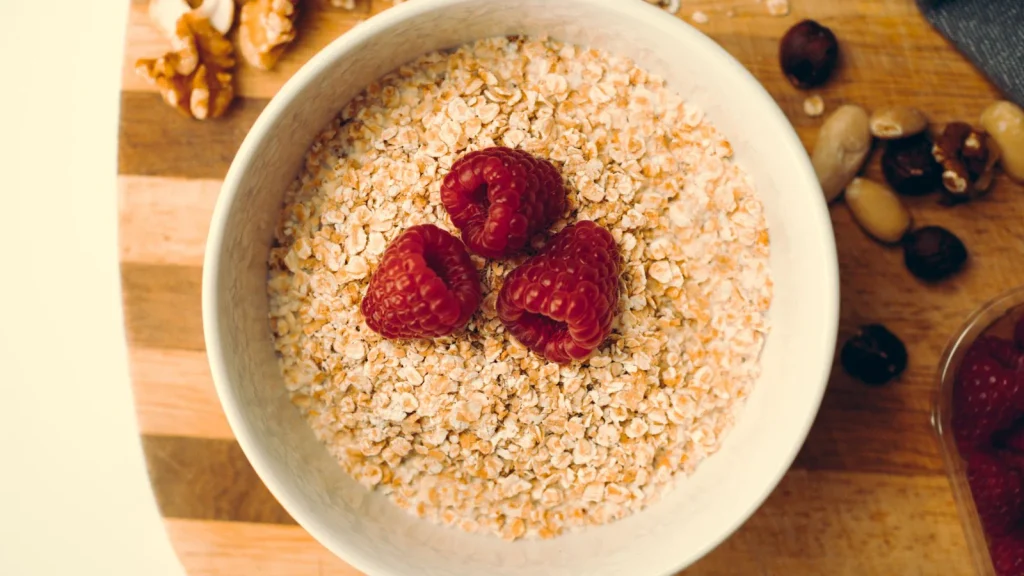
Oats are an accessible whole grain containing fiber, including beta-glucan, a soluble fiber studied for its effects on digestion and satiety. Their warm texture also makes them a comforting base for breakfast.
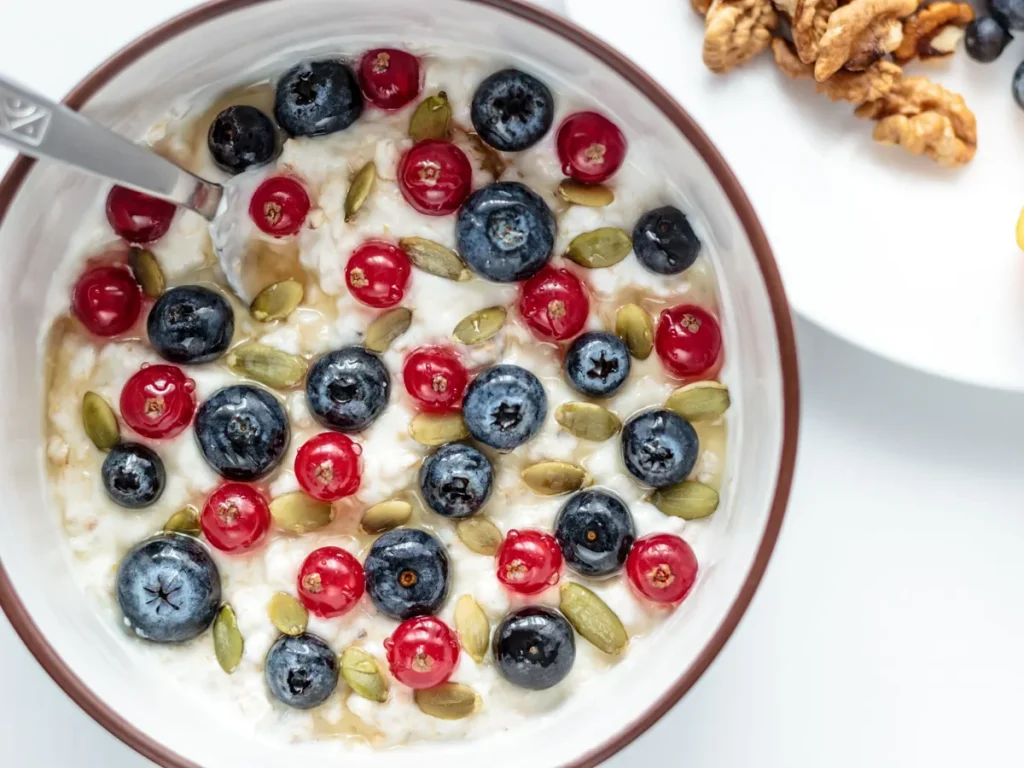
Try it: Prepare oatmeal with milk or a fortified plant drink, then add berries and plain yogurt. Overnight oats are another easy option for busy mornings.
2. Eggs
Eggs provide protein and are easy to use in a quick breakfast or lunch. They can be especially convenient when you want to add a protein source to a meal you already enjoy.
Try it: Serve scrambled eggs with whole-grain toast and tomatoes, or add a boiled egg to a salad. Prefer a plant-based option? Tofu can work in similar meals.
3. Plain Greek Yogurt
Greek yogurt often contains more protein than regular yogurt, although the amount varies by product. Plain varieties also make it easy to choose your own fruit or toppings.
Try it: Combine plain Greek yogurt with oats, chopped fruit, and a little cinnamon. Check the product label when comparing protein content.
4. Lentils
Lentils bring plant-based protein and fiber to soups, stews, and grain bowls. A 2014 meta-analysis of nine short-term trials found that pulses, including lentils, increased reported satiety compared with control meals. That did not translate into a clear reduction in the amount eaten at the next meal (Li et al., 2014).
Try it: Stir cooked lentils into vegetable soup, or serve them with roasted vegetables and rice.
5. Beans
Black beans, kidney beans, and white beans also provide both fiber and protein. They work well in familiar dishes, so there is no need to start with a new recipe.
Try it: Add beans to rice bowls, soup, or a vegetable salad. Rinsing canned beans can remove some of the added sodium.

6. Apples
Apples provide water and dietary fiber, particularly when eaten with their skin. They are also portable and easy to include in a meal or snack. A whole apple retains fiber that is largely absent from filtered apple juice.
Try it: Enjoy apple slices with plain yogurt or nut butter, if appropriate for your dietary needs. Or chop an apple into oatmeal.
7. Potatoes
Potatoes provide carbohydrate, water, and other nutrients. In a small 1995 study comparing foods under specific test conditions, boiled potatoes scored highly for short-term satiety. This does not mean every potato dish has the same effect or that potatoes are universally the “most filling” food (Holt et al., 1995).
Try it: Top a baked potato with beans and vegetables, or serve boiled potatoes alongside a protein source and a salad.
8. Chickpeas
Chickpeas are another pulse rich in fiber and plant protein. Their mild flavor fits salads, stews, and dips, making them useful when you want a simple pantry ingredient.
Try it: Add canned, rinsed chickpeas to a vegetable salad, or spread hummus in a sandwich with crunchy vegetables.

9. Nuts
Almonds, walnuts, pistachios, and other nuts contain unsaturated fats, as well as differing amounts of protein and fiber. Research suggests that eating nuts may reduce feelings of hunger in some settings, but results for increasing fullness have been mixed (Akhlaghi et al., 2020).
Nuts are energy-dense, and that is not a reason to avoid them. They are simply one option for adding flavor, texture, and nutrients to meals.
Try it: Add chopped nuts to oatmeal or yogurt, or pair a small handful with fruit if that suits your appetite.
10. Vegetables
Many vegetables contain water and fiber, adding variety, color, and volume to meals. Broccoli, carrots, leafy greens, zucchini, and cauliflower can all be useful, but they do not need to be eaten alone to be worthwhile.
Try it: Add frozen vegetables to soup, roast seasonal vegetables for dinner, or place sliced vegetables in a sandwich.
How to Build Everyday Meals That Feel More Satisfying
A practical meal does not have to follow a perfect formula. When you want something more substantial, try combining a protein source, a fiber-containing food, and enough overall food to meet your appetite. Flavor and enjoyment matter too.
Breakfast: Build on What You Already Eat
If oatmeal is your usual breakfast, add yogurt and fruit. If you prefer toast, try pairing it with eggs or tofu and some vegetables. Both options bring different foods together without making breakfast complicated.
For more inspiration, see CALUNEV’s “7 Easy Healthy Breakfast Ideas for Busy Mornings” in the Healthy Recipes & Meal Ideas section.
Lunch: Keep It Familiar
A rice bowl with black beans, roasted vegetables, and a dressing you enjoy is easy to adjust to your budget and preferences. Leftover lentils or chickpeas can also turn a simple salad into a more substantial meal.
Snack: Match It to Your Hunger
An apple may be enough when you want something light. At other times, apple slices with yogurt or nut butter may feel more satisfying. There is no need to ignore hunger simply because you have already had a snack.
Dinner: Choose Comfort and Balance
Try lentil and vegetable soup with bread, or a baked potato topped with beans and vegetables. Use what you have; a practical meal is one you can realistically prepare and enjoy.

Small Changes That Can Make a Meal More Satisfying
Sometimes the easiest improvement is an addition rather than a complete replacement. Use these ideas as flexible examples, not strict rules.
| If you usually have… | You could try… | What it adds |
| Plain oatmeal | Greek yogurt and berries | Protein, fiber, and variety |
| Toast on its own | An egg or tofu and tomatoes | A protein source and more variety |
| A leafy salad | Beans or chickpeas | Plant protein and fiber |
| Fruit on its own | Yogurt or nuts | Additional nutrients and texture |
| Vegetable soup | Lentils and a piece of bread | Protein, fiber, and energy |
A meal that feels filling to one person may not feel the same to someone else. Portions and combinations can be adjusted to suit your day.
Common Questions About Foods That Help You Feel Full
Does Protein Help You Stay Full?
Protein can increase short-term feelings of fullness, according to controlled studies. But it does not guarantee that you will be less hungry for the rest of the day. Meal size, food choices, and individual needs still matter.
Are All High-Fiber Foods Equally Filling?
No. Fibers differ in structure and function, and the effect of a fiber-containing food also depends on its texture, preparation, and the rest of the meal. Eating different fruits, vegetables, grains, and legumes is a sensible everyday approach.
Do Filling Foods Have to Be Low in Calories?
Not at all. Calories describe the energy a food provides; they do not, by themselves, tell you how satisfied it will make you feel. Nuts are energy-dense, while many vegetables contain more water. Both can contribute to enjoyable, nourishing meals in different ways.
Can I Increase Fiber All at Once?
It is usually more comfortable to increase fiber gradually and drink enough fluids. A sudden large increase can cause gas or bloating. If you have a digestive condition or need a specialized diet, seek individualized guidance from a qualified health professional.
Eating Well Can Start With One Small Change
You do not need a perfect meal plan to eat in a way that feels good for you. Keep the foods you enjoy, use what fits your budget, and try small additions when a meal leaves you hungry sooner than you would like.
Maybe that means beans in tonight’s soup, yogurt with tomorrow’s breakfast, or a few more vegetables alongside a familiar dinner. The goal is not to eliminate hunger. Hunger is a normal part of life.
It is to find simple, flexible meals that support your everyday well-being — one realistic choice at a time.
Sources and Further Reading
Selected scientific literature and public-health references used for the factual review:
- Kohanmoo, A., Faghih, S., & Akhlaghi, M. (2020). Effect of short- and long-term protein consumption on appetite and appetite-regulating gastrointestinal hormones: A systematic review and meta-analysis of randomized controlled trials. Physiology & Behavior.
- Li, S. S., et al. (2014). Dietary pulses, satiety and food intake: A systematic review and meta-analysis of acute feeding trials. Obesity.
- Holt, S. H., Miller, J. C., Petocz, P., & Farmakalidis, E. (1995). A satiety index of common foods. European Journal of Clinical Nutrition.
- Akhlaghi, M., et al. (2020). Effect of nuts on energy intake, hunger, and fullness: A systematic review and meta-analysis of randomized clinical trials. Critical Reviews in Food Science and Nutrition.
- Harvard T.H. Chan School of Public Health — The Nutrition Source: Fiber.
- Harvard T.H. Chan School of Public Health — The Nutrition Source: Oats.
- Centers for Disease Control and Prevention (2026). Tips for Increasing Vegetables and Fruits in Your Diet.
- Mayo Clinic News Network. Why Is Fiber Good for Your Overall Health?