
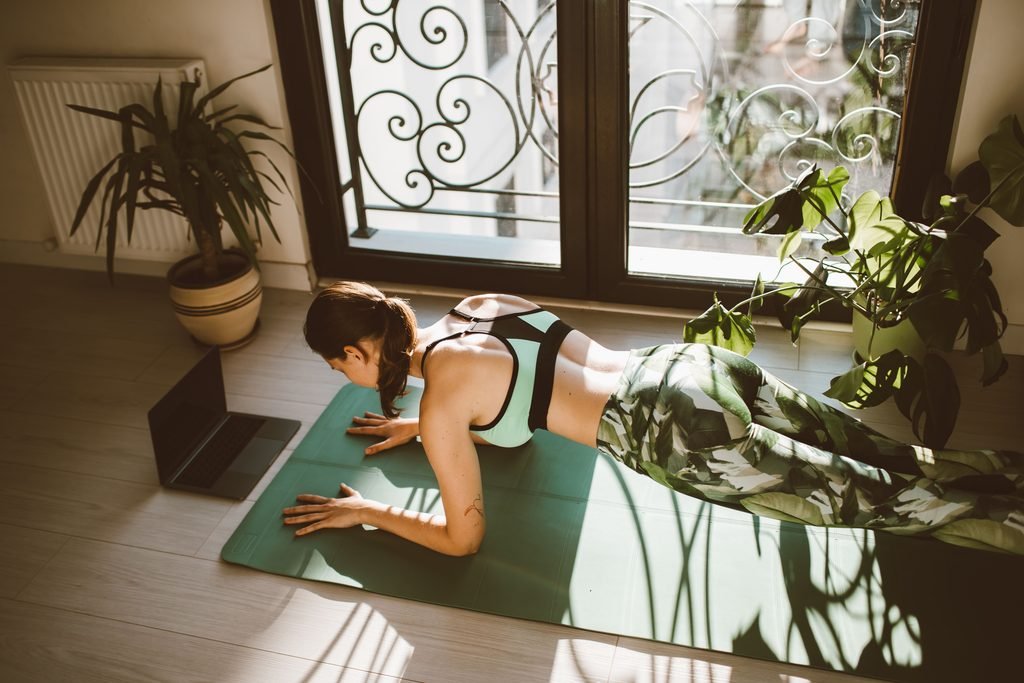
Starting to move more doesn’t require an elaborate workout plan or a collection of fitness equipment. Sometimes, a few minutes in a comfortable space at home is a practical place to begin.
If you’re new to exercise, returning after a break, or simply looking for gentle ways to add movement to your day, familiar motions like standing up from a chair, walking in place, and pushing against a wall can help you get started.
This guide brings together 10 approachable, no-gym exercises for adults. You’ll find simple instructions, ways to adjust each movement, and a flexible starter routine. The goal isn’t to do everything perfectly on day one. It’s to find movements that feel manageable and build from there.
Explore the Exercises
Exercise Guidance & Safety Note
The exercises and general recommendations in this article are informed by educational resources from the Centers for Disease Control and Prevention (CDC), the National Health Service (NHS), the American Council on Exercise (ACE), and other recognized health organizations. These organizations have not reviewed or endorsed this article.
This article is intended for general educational purposes only. It is not a substitute for personalized medical advice, physical therapy, or guidance from a qualified fitness professional.
If you are new to exercise, have a medical condition, are recovering from an injury or surgery, have balance concerns, or are unsure whether a movement is right for you, consult a qualified healthcare or fitness professional for individualized guidance.
Move at a comfortable pace, use stable support when needed, and stop exercising if you experience pain, dizziness, chest discomfort, or other unusual symptoms. Seek medical care promptly for concerning symptoms.
- Marching in Place
- Chair Squats
- Wall Push-Ups
- Standing Calf Raises
- Standing Side Leg Raises
- Glute Bridges
- Bird Dog
- Seated Knee Extensions
- Standing Knee Raises
- Heel-to-Toe Walk
Before You Begin: Make Room for Comfortable Movement
Choose a clear, level area with enough space to move without bumping into furniture. Wear comfortable clothing and stable, nonslip shoes if you are standing on a smooth floor. Keep water nearby, and use a sturdy, nonrolling chair or a wall for support when a movement calls for it. A mat or folded towel is optional for floor exercises.
Begin at an easy pace, and keep breathing throughout each movement rather than holding your breath. If you are not used to exercise, start with fewer repetitions and take breaks as often as needed.
Check with a qualified healthcare professional before starting if you have a health condition, a recent injury or surgery, significant balance concerns, or have been advised to limit activity. Stop if a movement causes sharp pain. If you experience chest pain, faintness, or unusual severe shortness of breath, stop exercising and seek prompt medical care; call emergency services for potentially serious symptoms.
These instructions are general educational information, not a personalized exercise or rehabilitation plan.
1. Marching in Place
Marching in place is an easy way to warm up without needing a large room or heading outdoors.
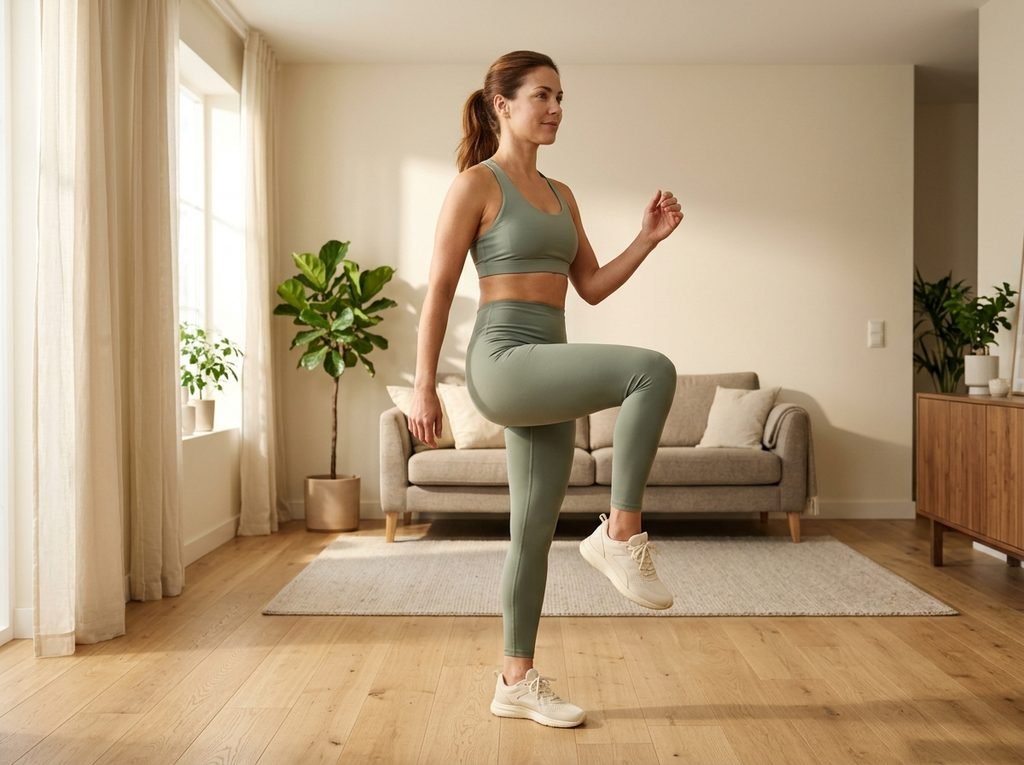
Focus: Gentle movement and coordination
How to Do It
- Stand tall with your feet about hip-width apart and your shoulders relaxed.
- Lift one foot a comfortable distance off the floor, then set it down softly.
- Alternate legs at a relaxed pace, letting your arms swing naturally if comfortable.
Beginner starting point: 30–60 seconds at an easy pace.
Make it easier: Hold a sturdy countertop for support, or march while seated in a stable chair.
Common mistakes to avoid: Leaning backward, stomping, or lifting your knees higher than feels comfortable.
2. Chair Squats
A chair provides a familiar reference point for practicing the motion of sitting down and standing back up.

Focus: Thighs, hips, and everyday sit-to-stand strength
How to Do It
- Stand just in front of a sturdy, nonrolling chair with your feet about hip-width apart.
- Bend at your hips and knees, sending your hips back toward the chair while keeping your feet planted.
- Gently touch the seat or sit down with control, then press through your feet to stand tall again.
Beginner starting point: 5–8 repetitions.
Make it easier: Begin seated and stand using the chair’s armrests if needed; sit back down slowly. If balance is a concern, have someone available to assist.
Common mistakes to avoid: Dropping heavily into the seat, rushing the movement, or pushing through knee or hip pain.
3. Wall Push-Ups
Wall push-ups offer a standing alternative to floor push-ups, with the wall supporting part of your body weight.
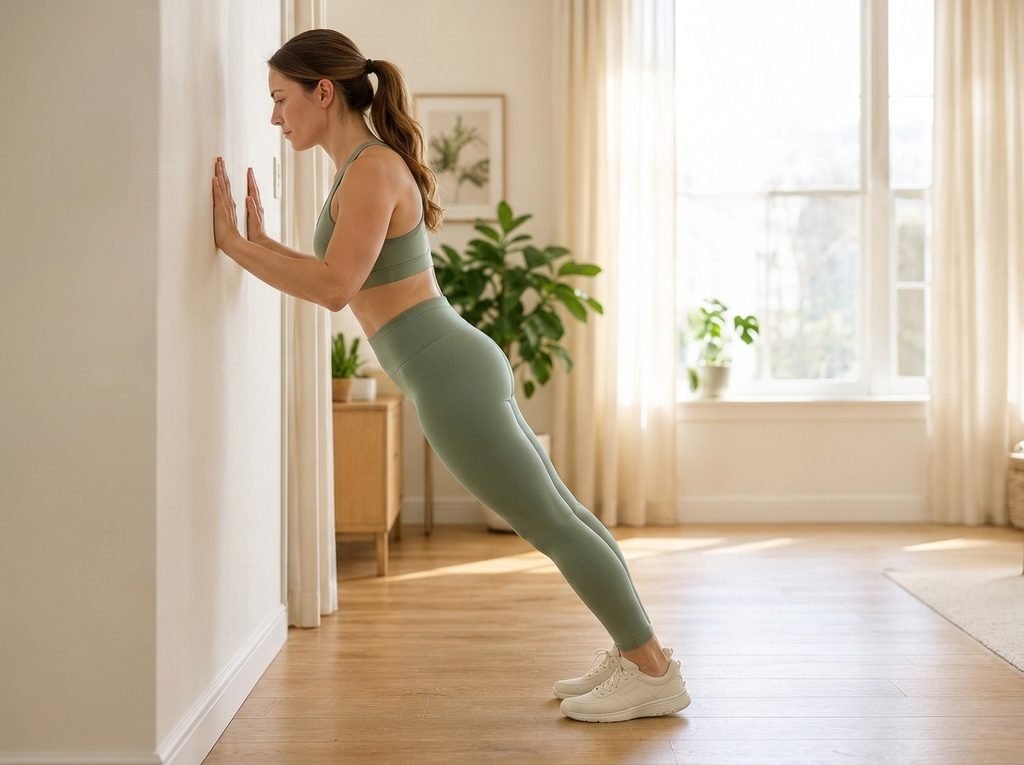
Focus: Chest, shoulders, and arms
How to Do It
- Face a solid wall and place your palms against it at about shoulder height and shoulder-width apart.
- Step your feet back a comfortable distance, keeping your body in a straight line.
- Bend your elbows slowly to bring your chest toward the wall, then press gently back to the starting position.
Beginner starting point: 5–8 repetitions.
Make it easier: Stand closer to the wall to reduce the effort.
Common mistakes to avoid: Letting your hips sag, shrugging your shoulders toward your ears, or forcing the movement if your wrists hurt.
4. Standing Calf Raises
This small movement works the muscles that help you rise onto your toes and support walking.

Focus: Calves and ankle control
How to Do It
- Stand behind a sturdy chair or near a countertop and rest your hands lightly on it.
- Keep your feet about hip-width apart and slowly lift both heels off the floor.
- Pause briefly, then lower your heels in a smooth, controlled motion.
Beginner starting point: 6–10 repetitions.
Make it easier: Lift your heels only a little, keeping both hands on the support.
Common mistakes to avoid: Bouncing, rolling your ankles outward, or letting go of support before you feel steady.
5. Standing Side Leg Raises
Moving a leg gently to the side helps you practice controlled hip movement while balancing on the other leg.

Focus: Outer hips and standing stability
How to Do It
- Stand upright beside a stable countertop or behind a sturdy chair.
- Keep your torso tall as you slowly lift one leg a short distance out to the side.
- Lower with control, then repeat on the other side. Keep your toes facing mostly forward.
Beginner starting point: 5–8 repetitions per leg.
Make it easier: Use both hands for support and make the movement smaller.
Common mistakes to avoid: Leaning your trunk away from the moving leg, swinging it quickly, or turning your toes sharply upward.
6. Glute Bridges
A glute bridge is a floor exercise that practices lifting the hips using the muscles around the back of the hips.
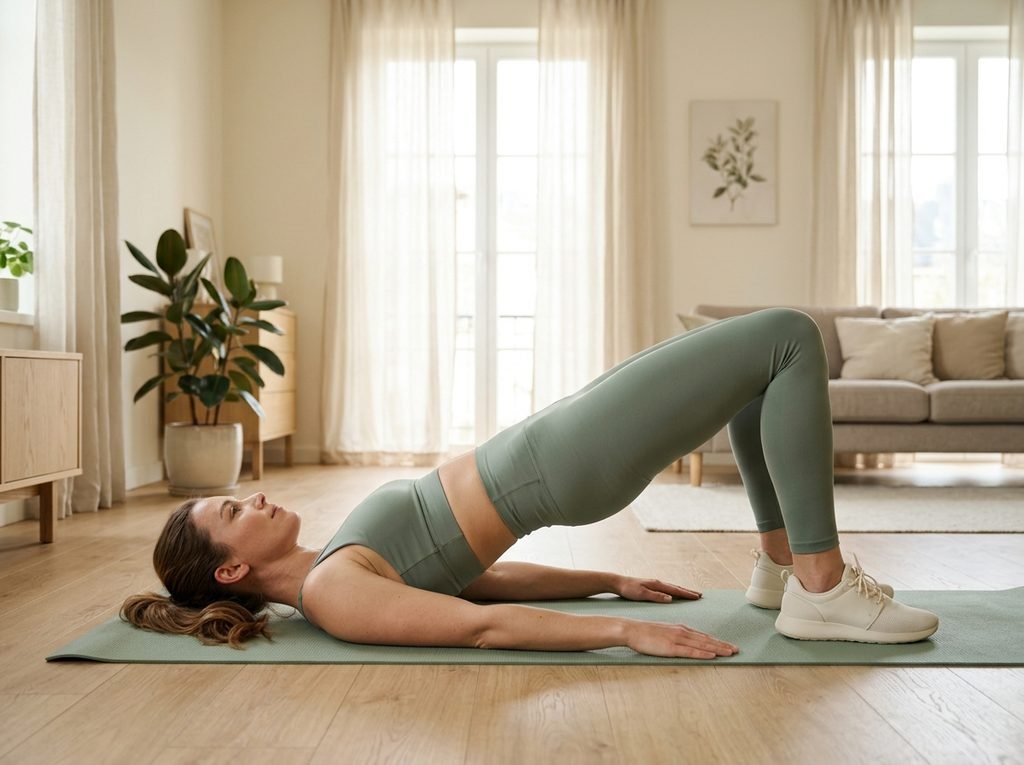
Focus: Glutes and hip extension
How to Do It
- Lie on your back on a comfortable surface with your knees bent and your feet flat, about hip-width apart.
- Gently tighten your abdominal muscles and squeeze your glutes as you lift your hips a small, comfortable distance.
- Pause briefly without arching your lower back, then lower slowly to the floor.
Beginner starting point: 5–8 repetitions.
Make it easier: Lift your hips only a few inches, or skip this exercise if getting to and from the floor is difficult.
Common mistakes to avoid: Pushing the hips excessively high, holding your breath, or feeling strain in the lower back.
7. Bird Dog
Bird dog encourages steady trunk positioning while you move an arm and the opposite leg.

Focus: Core control, back, and balance
How to Do It
- Begin on your hands and knees, with your hands under your shoulders and knees under your hips.
- Gently brace your midsection and extend one leg behind you, keeping your hips level.
- If you feel stable, reach the opposite arm forward. Hold for a comfortable breath, return slowly, and switch sides.
Beginner starting point: 4–6 controlled repetitions per side.
Make it easier: Move only one arm or one leg at a time. Place a folded towel under your knees for comfort.
Common mistakes to avoid: Twisting your hips, raising the leg too high, dropping your lower back, or forcing painful wrist or knee positions.
8. Seated Knee Extensions
A supported seated movement gives you a straightforward way to gently work your legs without standing.
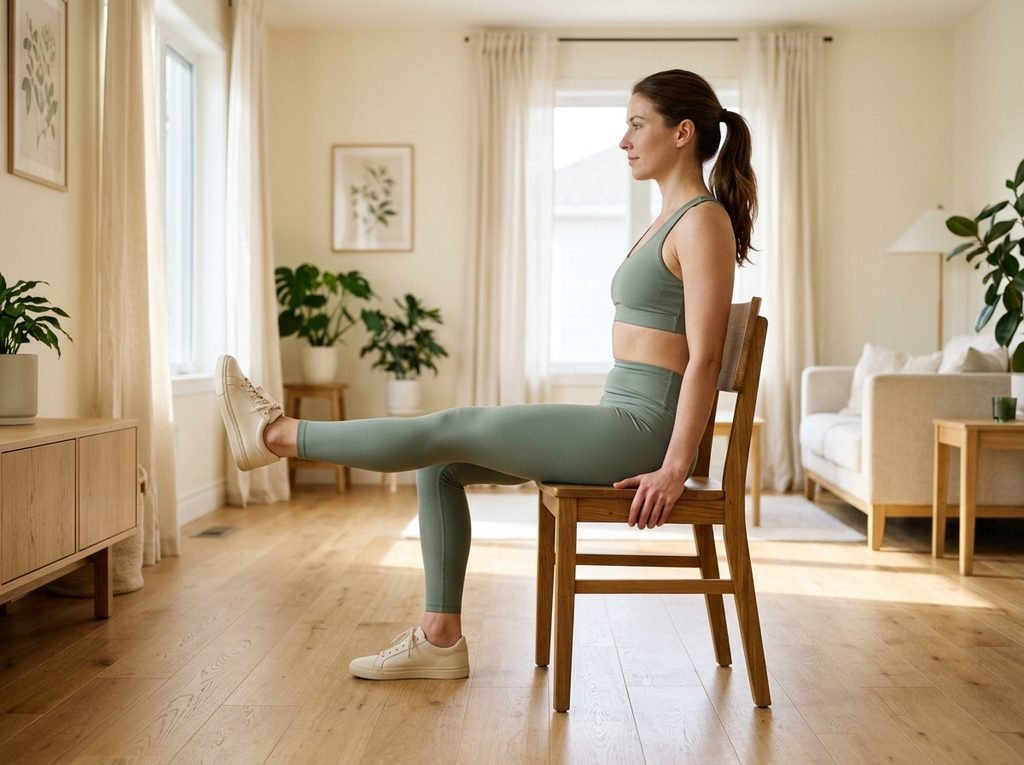
Focus: Front of the thighs and controlled knee movement
How to Do It
- Sit tall in a stable chair with your back supported if needed and both feet on the floor.
- Slowly straighten one knee as far as is comfortable, keeping the movement smooth.
- Pause briefly without forcefully locking the knee, then lower the foot and switch legs.
Beginner starting point: 6–10 repetitions per leg.
Make it easier: Straighten the leg only part of the way.
Common mistakes to avoid: Kicking quickly, leaning far backward, or pushing into knee pain.
9. Standing Knee Raises
Standing knee raises are similar to marching in place, but you perform each repetition more slowly, focusing on control and balance.

Focus: Hip movement, balance, and coordination
How to Do It
- Stand beside a stable counter or behind a chair, with one or both hands ready for support.
- Shift your weight onto one foot and lift the other knee a comfortable distance in front of you.
- Lower slowly and repeat on the other side, keeping your upper body tall.
Beginner starting point: 5–8 repetitions per leg.
Make it easier: Keep the toes of your moving foot close to the floor, or use a seated marching variation.
Common mistakes to avoid: Leaning backward, jerking your knee upward, or trying to balance without needed support.
10. Heel-to-Toe Walk
Walking with one foot directly in front of the other challenges your balance more than ordinary walking. It is optional and should always be practiced with support nearby.
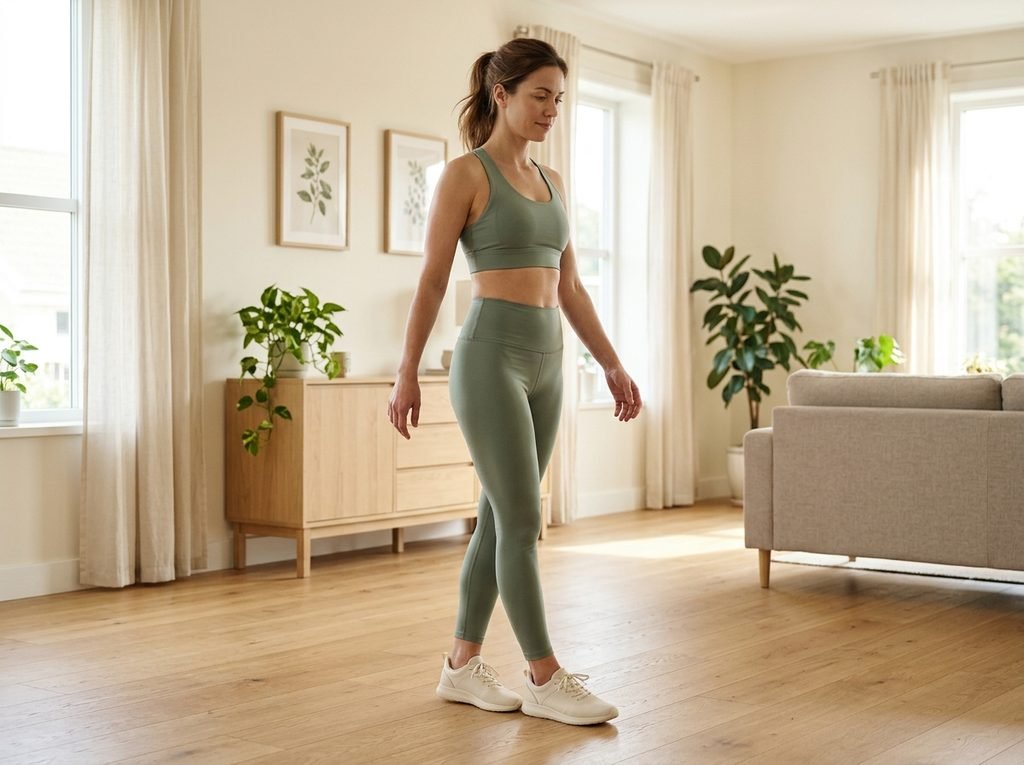
Focus: Balance and careful foot placement
How to Do It
- Stand beside a wall or long, stable countertop, with a hand close enough to touch for support.
- Look ahead and step forward, placing the heel of one foot directly in front of, or nearly touching, the toes of the other.
- Take a few slow steps, using the wall or counter whenever needed. Stop before you become unsteady.
Beginner starting point: 4–8 careful steps, only if you feel stable.
Make it easier: Leave a small gap between your feet, hold the counter, or practice an ordinary supported walk instead.
Common mistakes to avoid: Rushing, looking only at your feet, closing your eyes, or practicing near tripping hazards.
A Simple 10–15 Minute Beginner Routine
You do not need to complete all 10 exercises in one session. Start with a handful of movements that feel comfortable, and let your routine grow as you become familiar with them.
Here is one example of a short session. The time is an estimate; go at your own pace, pause when needed, and finish sooner if you are tired.
- Warm up: March in place for 1–2 minutes, or use seated marching.
- Chair squats: 5–8 slow repetitions.
- Wall push-ups: 5–8 slow repetitions.
- Standing calf raises: 6–10 repetitions with support.
- Standing side leg raises: 5–8 repetitions on each side.
- Cool down: Walk slowly around the room for 1–2 minutes and let your breathing settle.
Rest for about 30–60 seconds between movements, or longer if you need it. If five movements feel like too much, begin with just two or three. On another day, you might swap in glute bridges, bird dog, or seated knee extensions. Balance exercises such as the heel-to-toe walk are optional and should be done only in a safe, supported setting.
This mini-routine is a starting point, not a complete weekly exercise prescription. Adults are generally encouraged to work toward at least 150 minutes of moderate-intensity aerobic activity per week plus muscle-strengthening activities on two or more days. These recommendations can be approached gradually, based on ability and health circumstances.
How to Make Movement a Habit Without Overcomplicating It
Choose a realistic starting point
Two short sessions in a week can be a manageable way to begin practicing strength movements. If that is too much right now, do less and build gradually. A short walk or a few minutes of comfortable movement on other days can also be part of a more active routine.
Keep an eye on comfort and control
Smooth repetitions matter more than speed. Stop a set when you cannot maintain a comfortable, controlled movement. Muscle effort can feel challenging, but sharp pain, dizziness, or unusual breathlessness are signals to stop and reassess.
Make small changes over time
Once a movement feels familiar, you might add a repetition or two, extend your marching time, or practice a second set on a different day. There is no need to increase everything at once.
Let your space work for you
You can keep this simple: a stable chair, a solid wall, and enough clear floor space are useful for several of these exercises. A supportive environment can make it easier to return to movement without a complicated setup.
Frequently Asked Questions
Do I really need no equipment?
You do not need weights, bands, or gym machines for these movements. Some exercises use a sturdy chair or wall for stability, and a mat or folded towel may make floor work more comfortable.
Can I do all 10 exercises in one day?
You may choose several in one session if they suit your ability, but there is no requirement to do all 10. Begin with a small selection and focus on comfortable, controlled form. Longer is not automatically better.
What if I cannot get down on the floor?
Skip glute bridges and bird dog, or seek a suitable alternative from a qualified fitness or healthcare professional. Several of the standing and seated exercises in this guide can be done without floor work.
How often should a beginner exercise?
The best starting schedule is one you can practice safely and consistently. You might begin with two short strength-focused sessions each week, separated by a rest day, then gradually add comfortable aerobic activity. If you have health concerns, ask a qualified professional what schedule fits your circumstances.
A Little Movement Goes a Long Way
A home workout does not have to feel intimidating. It can begin with a chair, a wall, and a few intentional minutes in your day.
Choose two or three movements that make sense for your body and your space. Practice them slowly, take breaks, and build a routine that supports your everyday life rather than competing with it.
Looking for more practical movement ideas? Explore our Home Workouts & Fitness collection for simple ways to stay active at home.
At CALUNEV, the goal is not a perfect routine. It’s making room for movement that feels possible today.
References & Further Reading
The following resources informed the general activity recommendations and selected exercise guidance in this article. They are provided for readers who would like to learn more; they do not constitute endorsement of CALUNEV.